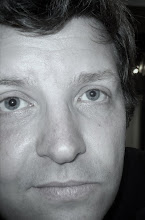
I interviewed the excellent Canadian singer and songwriter in 2007 for I Shot a Man in Reno. He was very erudite, insightful and sincere, and said a mouthful of interesting stuff - much of which, alas, didn't make it into the finished version of the book. Here's a comprehensive transcript of the interview. Enjoy.
Your album Time Being is full of ruminations on mortality. Did you sit down with the conscious intention of tackling the subject?
No, they’re not conscious – and not welcome! Around that time I had a few brushes with death, a couple of high school buddies had passed away, and that started informing some of the songs. “And Now The Day Is Done,” “Hands Of Time”, “Cold Hearted Wind” and a few others that aren’t on the record. That’s when I started noticing that it was kind of a dark record. I was actually afraid to play them to the label – I sat on it for about a year. I wasn’t so much preoccupied with my own mortality, I don’t really feel any different, but it’s strange to got to funerals for people who are the same age as you. So I guess they were songs that I felt compelled to write at the time. I’d like to think that they’re comforting in some way. I thought “Hands of Time” was really comforting.
“And Now The Day Is Done,” on the other hand, strikes me as just desolate.
It’s mostly a sad song. I was wrestling with even putting it on the record. It seemed kind of appropriate, almost like something you would sing in church, and felt like a nice way to end the record. I’ve always tried to write hopeful songs, but sometimes it’s not possible. It just comes out darker or sadder than you intended. But I know the widow of one my friends who passed away, when I played my home town she requested that song – which was difficult to sing. We only really played it two or three times on the whole tour.
Who do you write for when you write about mortality?
I write for myself first but the hope is that someone out there listening will get something from it. I hate songs that are overly optimistic, or just being happy for happy’s sake. I always try to write realistically. With Time Being I wanted to write about death in a solemn way but also a humourous way. “The Grim Trucker” is kinda of a song about karma. It was a fun song to write, but one I didn’t know if I should put on the record. It’s comic relief. There is almost a gallows humour in the notion of death and songs about death. Nervous laughter about the whole thing – everybody is going there. Maybe that’s the purpose of a song like that.
Do you have spiritual or religious beliefs, and do they seep into the songs about death?
Since I was a kid everyone has always told me there is a better place waiting for us. There’s gotta be something better than this! It’s amazing to be alive but you look around at all the horrors all over the world…. I’m a God person, not a religious person, but it’s hard to express that without sounding crazy. I’ve always had spiritual songs on my albums. With Cobblestone Runway all of a sudden I had songs like “God Loves Everyone” and “Golden Hills”. At that time in my life things were really falling apart. I’d been dropped [by my label] and my family fell apart and I was trying to look for something a bit deeper and more reassuring just for myself. And I guess I’m still there.
Who deals with death well in music?
My son is really into rap music. Some of those people are just like poets – some stuff is so real it’s scary almost. Even the Eminem stuff when he was getting serious: “The Way I Am” and “My Words Are Weapons”. I like that kind of stuff instead of how many girls I have and how many rings I’m wearing. The whole thing with rap is credibility. The music comes from a violent place and the best of it is very powerful. It’s kind of like if you don’t have that connection [to a world of violence] then no-one takes you seriously. Then when you get successful you spend the rest of your career trying to prove that you’ve still got it.
What about some of the more venerable rock musicians?
Lately, Dylan on Time Out Of Mind is writing about things that kind of make sense to me. Tom Waits, I like his take on that kind of stuff. Judee Sill had a real connection with the spirit world. Even Paul McCartney is tackling these things, on Chaos and Creation in the Back Yard he wasn’t trying to be too jolly. With the Stones, unfortunately, people want to keep them where they are. It’s half their fault and half not, but you’d think there would be more wisdom coming from them.
Tell me about your song “Pretty Little Cemetry”
I moved to Toronto when my son was about two years old, and we lived across the street from a cemetry. He asked a lot of questions about it so we’d go for walks through there on the weekend and the questions were hard to answer. What he really wanted to know was: ‘Why these people were under the ground and where do they go?’ I was only twentysomething at the time and I didn’t really know how to answer. In the song we came upon a grave for a little boy, which is actually a real grave, and for a kid it must mess you up in a way. That’s the thing about life and death – from the minute you’re born you’re old enough to die. It’s always seems sadder when someone young dies, but we don’t really know what’s going on behind, what their soul is yearning for. Like Jimi Hendrix. People say, ‘What a waste, how tragic,’ but maybe he burned so bright in his lifetime that he didn’t want to be an old man and have all these people like Van Halen playing circles around him! Or Lennon. It’s almost like we create the death that we have coming. Life seems to have a plan, and it seems perfect in a weird way. So that song is pretty much taken from life. It’s a song that’s really human and not jokey. It’s very real.
Copyright – Graeme Thomson, 2008

 A particularly astute and well-written four-star review of I Shot a Man in Reno appears in this week's issue of Time Out, concluding that "it's in making... connections between death songs and a life lived that I Shot a Man in Reno really shines." I'm so glad somebody has picked up on this aspect of the book: the way that good death songs can really throw an affirming light on existence in general, and our own individual lives in particular.